Why Plant Identification Comes First at Kingdom University
CONTENT SUMMARY
Ask a Kingdom University graduate what they learned first and the answer is almost always the same: how to tell one plant from another. Not what a plant does. What it is. This post explains why that order is deliberate, what identification actually involves, and how to begin with the plants outside your own door.
- A plant name is a promise about what is in the cup. Many useful plants have a lookalike, and some lookalikes are dangerous.
- Identification means reading the whole plant: leaf, stem, flower, smell, habitat and season together, never one photograph.
- Only after identification is solid do the courses move to preparation and then the green herbal pharmacy.
By Brooke Freedom · Kingdom University of Natural Medicine · October 2026
A name is a promise
When someone says chamomile, they are making a promise about which plant is in the cup. If the plant was picked by sight from a field, that promise is only as good as the eye of the person who picked it. Queen Anne’s lace and poison hemlock grow in the same ditches and bloom in the same white clusters. Goldenrod and ragweed share a season and a roadside. An herbalist who cannot tell them apart on sight has no business handling either.
What identification actually means
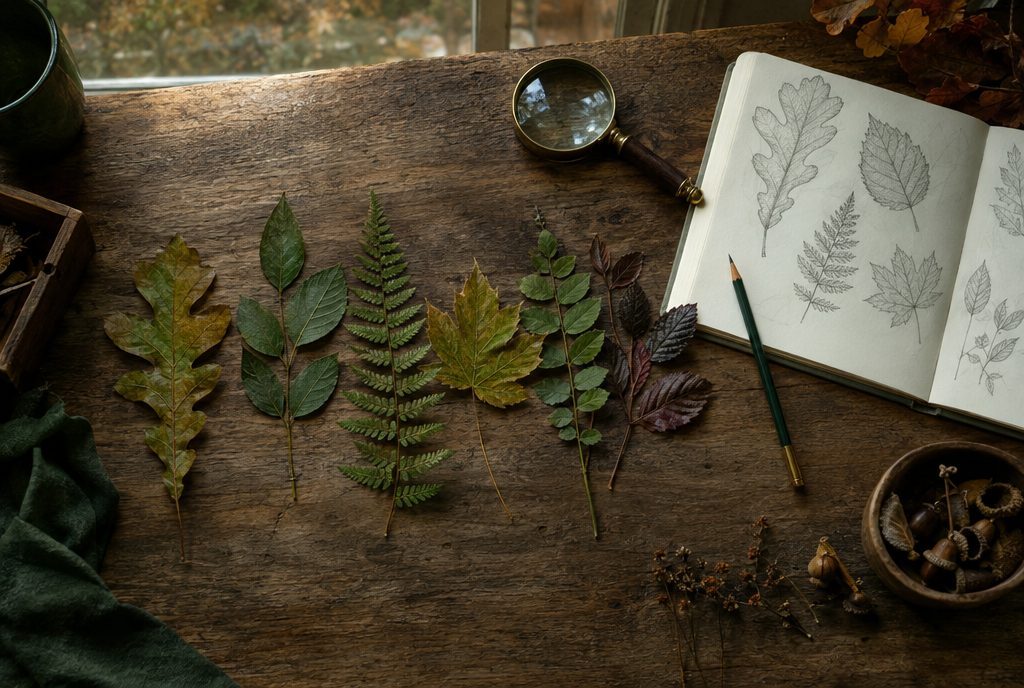
It is more than matching a picture. Students learn to read a plant the way a botanist does:
- Leaf shape, edge and arrangement on the stem
- The stem itself: hairy or smooth, round or square, hollow or solid, spotted or plain
- The flower’s structure, not just its color
- The smell when a leaf is crushed
- Habitat: wet or dry, sun or shade, roadside or woodland
- Season: what is blooming, fruiting or going to seed right now
Put together, those details settle the question in a way one photograph never can. Students learn the Latin names too, because common names change from county to county and the Latin does not.
Then preparation, then the pharmacy
Only after a student can identify a plant with confidence do the courses move to preparation: harvesting at the right time, drying, storing, and the traditional ways plants have been made into teas, tinctures and salves. From there the program moves into the green herbal pharmacy, the body of knowledge about how plants have been used across cultures and centuries. Each stage rests on the one before it. Skip the first and the rest is guesswork.
How the program runs
Every course is delivered by correspondence and through the student portal. You read, you answer in your own words, your tutor grades it and the next course unlocks. You set the pace. Students study from the certified herbalist level through the doctorate, and graduates qualify for board certification through the American Association of Drugless Practitioners.
TRY THIS WEEK
- Pick one plant in your yard or on your street and look at it every day for a week. Leaf, stem, flower, smell.
- Find its Latin name. Write it on an index card.
- Find its most common lookalike and learn one difference you can see from standing height.
- Photograph it in morning light and again at dusk. Notice what changes.